Notes From the Field
Job 1: The phantom leak above the conference room. Building manager in Vincennes called about water staining a ceiling grid every few weeks. No pattern with rain volume, just timing. We walked the roof and found nothing obvious. Pulled the rooftop unit access panel and the condensate pan was rusted through at one corner. Not a roof leak at all. We told him to call his HVAC contractor and charged for the inspection only. That kind of call happens more than people expect, which is why a proper commercial roof inspection is usually step one before any repair gets quoted.
Job 2: TPO seam failure on a 2012 install. Twelve year old single ply, white TPO, about 18,000 square feet. Owner thought he needed a full replacement. We probed the insulation in eight locations with a moisture meter. Seven came back dry. The actual issue was three seams that had separated near a parapet wall, plus two pipe boots that had cracked from UV exposure. Repair came in around $2,400. Replacement would have been north of $90,000. We wrote the repair and told him to plan for replacement in five to seven years, not now. We also flagged two more boots that looked fine that day but would crack within a year or two based on how the top layer was chalking. He appreciated the heads up because it let him budget instead of getting surprised.
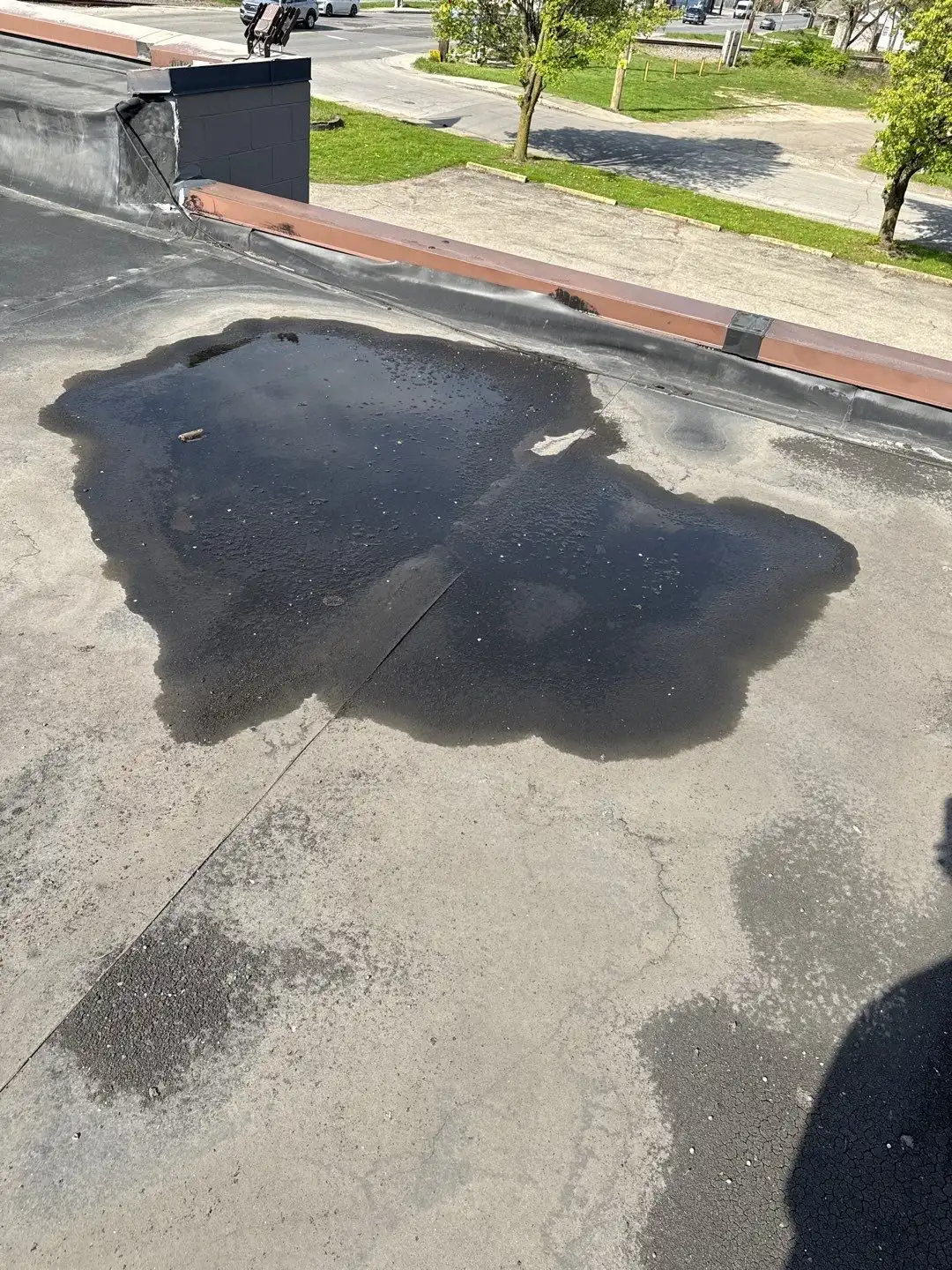
Job 3: EPDM with ponding water and a soft deck. This one we could not save the cheap way. Owner wanted spot repairs. We stepped onto the roof and the deck flexed under our boots near a low drain. Cut a test square and the insulation was saturated, the wood deck was rotted, and the EPDM was holding water like a kiddie pool. Told him directly: a patch here buys you maybe one season. We walked him through the difference between commercial roof restoration and replacement so he understood why coating was not an option on a wet substrate.
Job 4: Modified bitumen on a restaurant in Vincennes. Grease exhaust fan about ten feet from a chronic leak. Owner had three patches on it already from two different contractors. The membrane around the curb was glazed and brittle from years of airborne grease. No torch down patch was going to stick to that surface long term. We degreased the area with the right solvent, cut back the contaminated membrane, rebuilt the flashing with a compatible mod bit cap sheet, and added a grease containment pan around the fan so the new work would not get coated in the same residue. Sometimes the repair is not just the membrane. It is the conditions around it.
What Actually Drives the Price
Pricing on commercial roof repair in Vincennes is not a per square foot number you can pull from a chart. It is a stack of variables. Membrane type matters: TPO and PVC weld differently than EPDM, which is glued or taped. Access matters: a single story strip mall is faster than a four story office with a locked roof hatch and an interior ladder. Penetration density matters: every pipe boot, curb, and skylight is a potential failure point and a potential labor hour.
Material compatibility is another quiet driver. If the original membrane is a 45 mil EPDM from a manufacturer that no longer makes that exact product, we may have to use a universal cover tape system rather than a like for like patch. That changes labor time and sometimes warranty terms. Age also matters. A ten year old TPO has shrunk slightly and pulled tension on every seam, so a patch near a corner needs relief cuts the original installer never had to think about. None of this shows up in a flat per square foot quote, which is why we walk the roof before we put a number on paper.
Typical ranges in Vincennes land roughly like this. A single pipe boot or small penetration repair usually runs $350 to $650. Seam repair of ten to twenty linear feet falls in the $800 to $1,800 range. A membrane patch that requires cutting out wet insulation and replacing it before the new membrane goes down sits between $1,500 and $4,500 depending on the saturated area. Multi area repairs with flashing rework around curbs and parapets run $3,500 to $8,500. Emergency tarp and dry in work, billed as a stabilization rather than a permanent fix, generally comes in between $600 and $2,500. These reflect typical Central Indiana conditions and shift with access, membrane type, and weather on the day of the work.
Decisions We Make on Every Job
- Is the leak source actually the roof, or is it HVAC, plumbing, or wall flashing?
- Is the insulation dry, damp, or saturated under the membrane?
- Is the deck structurally sound or compromised by long term moisture?
- How much warranty life is left on the existing system?
- Will the repair tie cleanly into the existing membrane, or fight it?
- Is the weather window long enough to do the work correctly?
- Does the owner want shortest term cost or longest term value?
- Are there nearby conditions (grease, chemical exhaust, foot traffic) that will shorten the life of any repair we install?
How We Handle an Active Leak
When water is coming through the ceiling right now, the order of operations changes. Severity gets assessed over the phone first so we know what to load on the truck. If a tenant is catching water in trash cans, we prioritize tarping and dry in over a perfect permanent repair. The goal is to stop the active intrusion, then come back when the membrane is dry and the deck temperature is in spec for proper adhesion or welding. Trying to weld a TPO patch onto a wet, 38 degree roof in a January drizzle does not bond, and we are not going to pretend it does. For those middle of the night situations, commercial emergency roof repair is a different scope than a scheduled repair and gets quoted that way.
One thing we tell every property manager: take photos of the interior damage before anything gets cleaned up, and note the time water was first observed. That information helps us correlate the leak with weather data and trace it back to a specific area of the roof. A leak that shows up two hours after rain stops behaves differently than one that drips during the storm, and that timing tells us whether we are chasing a membrane breach or a slow capillary path through a seam.